How to Clean an Electric Toothbrush
To clean an electric toothbrush, rinse the brush head, wipe the handle, clean around the joints, and let every part air-dry separately. Do this after brushing, then give the head and handle a deeper clean each week.
On this page (10 sections)
- How should you clean an electric toothbrush after each use?
- How do you deep-clean the brush head?
- How should you clean the electric toothbrush handle?
- How do you clean an electric toothbrush charger?
- How can you dry an electric toothbrush safely?
- Should you use a toothbrush case at home or while traveling?
- What should you avoid when cleaning an electric toothbrush?
- How often should you clean each part?
- What is the easiest cleaning routine to keep?
- The main rule is simple: clean water removes fresh residue, a soft cloth handles the handle, and airflow finishes the job. Keeping the brush dry between uses makes the next cleaning quick.
To clean an electric toothbrush, rinse the brush head, wipe the handle, clean around the joint, and let every part air-dry separately. Do this after brushing, then give the head and handle a deeper clean each week.
Toothpaste residue collects where the brush head meets the handle, around the power button, and near the charging base. A short rinse after every use prevents buildup, while regular wiping keeps the handle from becoming sticky.
How should you clean an electric toothbrush after each use?
Rinse the brush head under running water immediately after brushing. Hold the head with the bristles facing down, rotate it as you rinse, and use your fingers to remove visible toothpaste from between the bristles.
Run water over the back and sides of the head too. Do not press the bristles hard against the faucet, since rough handling can bend them before their normal replacement time.
Shake off excess water over the sink. Wipe the handle with a clean, damp cloth, paying attention to the power button and the area where the head connects.
Keep the handle out of standing water. If toothpaste has dried around the joint, use a soft cloth or cotton swab dampened with water rather than scraping with a sharp object.
Leave the head attached only if both parts can dry fully. Removing it after brushing often exposes the connection area to air and makes it easier to spot residue.
How do you deep-clean the brush head?
Deep-clean the brush head once a week by rinsing it, wiping the connection point, and allowing it to dry completely. Remove the head from the handle and rinse all sides under clean running water.
How to clean around the brush-head joint
Use a soft cloth or cotton swab around the lower part of the head and the upper connection on the handle. This area often holds a thin ring of toothpaste that a quick rinse misses.
Do not push a tool deep into the connection. Wipe the outside, rinse the removable head, and leave both pieces separated until the moisture has drained.
Inspect the bristles while the head is clean. Replace the head when the bristles are bent, spread out, or damaged, even if the head still looks generally clean.
A head that stays damp in a closed space can develop an unpleasant smell. Airflow matters more than adding a stronger cleaner.
How should you clean the electric toothbrush handle?
Wipe the handle with a soft, damp cloth, then dry it with a clean towel. Focus on the power button, grip surface, bottom edge, and the area beneath the removable head.
Avoid running the powered handle under a strong stream unless its care instructions clearly allow that method. Water can enter seams, buttons, or charging contacts even when the outside looks sealed.
For toothpaste around the button, use a damp cotton swab and light pressure. Turn the handle around as you work so residue does not collect along the rear seam or in a textured grip.
Clean the bottom of the handle before placing it on a counter or charger. A dry base reduces the chance of transferring wet residue to the charging area.
Can a toothbrush holder help keep the handle clean?
A holder helps when it keeps the brush upright, separates it from the counter, and allows air to move around the head. It should also be easy to remove and rinse when toothpaste or water collects inside.
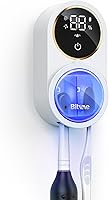
The Bitvae Wall Toothbrush Holder has 2 brush slots, a removable inner tray, air-drying ventilation, and a wall-mount design. It fits sonic, electric, and manual brushes, with a thicker-stem slot and a thinner-stem slot.
Its automatic cycle combines cleaning and ventilation, while the LED display shows the operating mode, cleaning progress, and battery level. The holder runs on a rechargeable battery through a Type-C port, and its package includes a wall bracket, screws, a USB cable, and a UV test card.
Clean the removable tray separately and rinse it before drying it fully. The holder is useful for shared bathroom storage, but the brush head still needs a normal rinse after brushing.
How do you clean an electric toothbrush charger?
Clean the charger with a dry or slightly damp cloth while it is unplugged. Remove toothpaste splashes and water marks from the outer surface, then dry it before reconnecting power.
Never submerge a charger or pour water over its plug, cord, or charging contacts. Keep the charging area away from the sink splash zone, and wipe spills as soon as you notice them.
The MeaeJoto Oral-B Charger has a smooth surface designed for wiping, an IPX7 waterproof rating, and a plug-in charging design. It is compatible with several Oral-B ranges, including io2 through io6, many Professional models, and Genius 6000 and 8000.
This charger uses induction, so the brush sits on the base rather than connecting through a loose cable. Its Type A plug is designed for North American outlets, while the charger supports 100–240V input.
Use the model compatibility information before pairing it with a brush. It does not fit Oral-B iO 7, iO 8, iO 9, or iO 10 models, and it is not designed for Philips Sonicare brushes.
How can you dry an electric toothbrush safely?
Dry the brush head upright and keep it uncovered until the bristles and connection area are dry. A cup, stand, or holder can keep the head away from wet counters, but it should not trap water around the bristles.
Shake the head gently after rinsing, then place it with the bristles facing upward or downward according to the holder's design. The key point is open airflow, not a particular direction.
Keep separate brushes from touching each other. Shared storage can spread toothpaste residue and moisture between heads, especially when several people use the same bathroom.
Wipe the counter beneath the brush as needed. A clean, dry storage area makes routine brush care easier and reduces the chance that the handle sits in a puddle.
For a fuller storage setup, see how to store an electric toothbrush in the bathroom. The best location is upright, open to air, and away from direct spray.
Should you use a toothbrush case at home or while traveling?
Use a case for travel only after the brush is dry. A case protects the brush in luggage, but packing a wet head can hold moisture against the bristles and handle.
The SIEANE Vented Toothbrush Case fits most straight-handle electric toothbrushes up to 10.1 inches long and 1.57 inches in diameter. It has bottom ventilation holes, a rotating lock, a hard polycarbonate shell, and enough room to keep the brush head attached.
Its inner shell shields the power button from pressure, which helps prevent accidental activation inside luggage. The smooth outer surface can be rinsed under running water, but dry the toothbrush before putting it inside.
The case does not fit manual toothbrushes, compact brushes, angled-neck models, or irregularly shaped electric toothbrushes. Measure the brush shape against the case dimensions before packing for a trip.
For travel storage ideas, see electric toothbrushes with a travel case. Keep the case open after a trip until its inside is dry.
What should you avoid when cleaning an electric toothbrush?
Avoid soaking the powered handle, using sharp tools, and sealing wet parts in a case. These shortcuts can damage the brush or leave moisture where wiping would have been enough.
Do not use a knife, pin, or metal pick to scrape toothpaste from the joint. A soft cloth or cotton swab removes surface residue with less risk of scratching or damaging a seal.
Avoid abrasive powders and rough scouring pads on the handle. They can dull the finish and create small scratches that collect more residue.
Do not place a wet brush head into a closed case or crowded drawer. Give it time to air-dry first, then use a ventilated case or open holder.
If the brush has a removable battery compartment, charging contact, or unusual cleaning requirement, follow the instructions for that model. Routine cleaning should never involve opening the handle.
How often should you clean each part?
Rinse the head after every use, wipe the handle several times a week, and deep-clean the connection area weekly. Clean the holder and charger when you see residue, water marks, or buildup.
A simple routine looks like this:
- Rinse the brush head after brushing.
- Shake off water and leave the head open to air.
- Wipe toothpaste from the handle and joint.
- Dry the handle before charging.
- Rinse or wipe the holder when residue appears.
- Clean the charger with a dry or slightly damp cloth while unplugged.
- Replace the head when its bristles become worn or bent.
Families can give each brush a separate storage slot. If several brushes share a bathroom, electric toothbrushes for seniors may also help when a larger grip, simple controls, or easier storage matters.
What is the easiest cleaning routine to keep?
For anyone learning how to clean an electric toothbrush, rinse the head, wipe the handle, separate wet parts, and keep storage ventilated. That routine handles the areas where toothpaste and moisture collect most often.
Use the Bitvae holder when open bathroom storage and a removable tray suit your routine. Choose the SIEANE case for dry travel storage, and choose the MeaeJoto charger when its Oral-B compatibility matches your brush.
The main rule is simple: clean water removes fresh residue, a soft cloth handles the handle, and airflow finishes the job. Keeping the brush dry between uses makes the next cleaning quick.
Frequently asked questions
How often should you replace an electric toothbrush head?
Replace the head according to the brush brand's instructions or when the bristles are worn, bent, or damaged. A clean head still needs replacement when it no longer brushes evenly or the bristles no longer hold their shape.
Should an electric toothbrush be stored upright?
Yes, upright storage helps water drain from the head and handle. Leave space around the brush so air can move freely, and avoid a closed container while the brush is still wet.
Can you use rubbing alcohol to clean an electric toothbrush?
Use only cleaning products allowed for your specific brush. For routine care, water and a soft cloth are the safer starting point because strong cleaners can damage finishes, seals, or other parts.